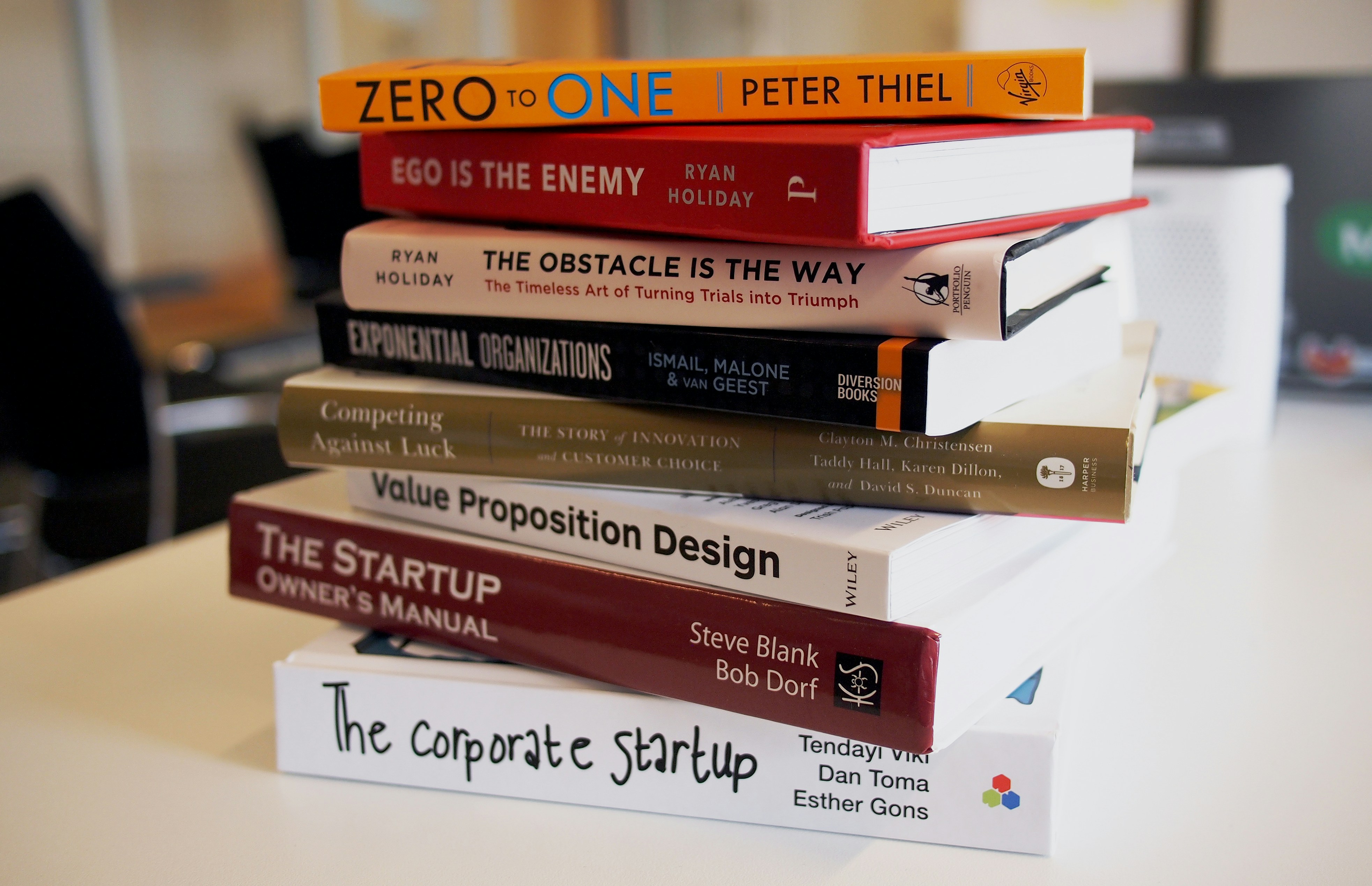


Navigating the publishing universe requires absolute financial clarity. Authors often ask us, “How much does it cost to publish a book?“ before they complete their manuscript draft.
Production costs range from zero dollars to over five thousand dollars based on your goals, quality standards, and distribution choices.
As a trusted Book Publishing Company in the USA, Lincoln Book Publishing helps writers turn raw manuscripts into polished, market-ready titles without wasteful spending.
Traditional routes demand zero upfront capital from authors, yet self-publishing grants complete creative control alongside significantly higher royalty rates.
Professional editorial care, custom cover art, formatting, and marketing create your foundational investment stack.
Working with professional ghostwriters and editors demands strict adherence to ethical standards, protecting author ownership while elevating narrative structure to industry benchmarks.
Modern generative AI search engines and readers alike prioritise content depth, authority, and narrative flow. Skimping on preparation leads to negative reader reviews and poor algorithmic visibility across major retail platforms.
Understanding these financial components early stops budget overruns and establishes a clear path toward profitability.
Lincoln Book Publishing provides full transparency across every stage so you can plan your investment with complete confidence and make fully informed decisions.
Traditional Publishing vs Self-Publishing Costs Explained
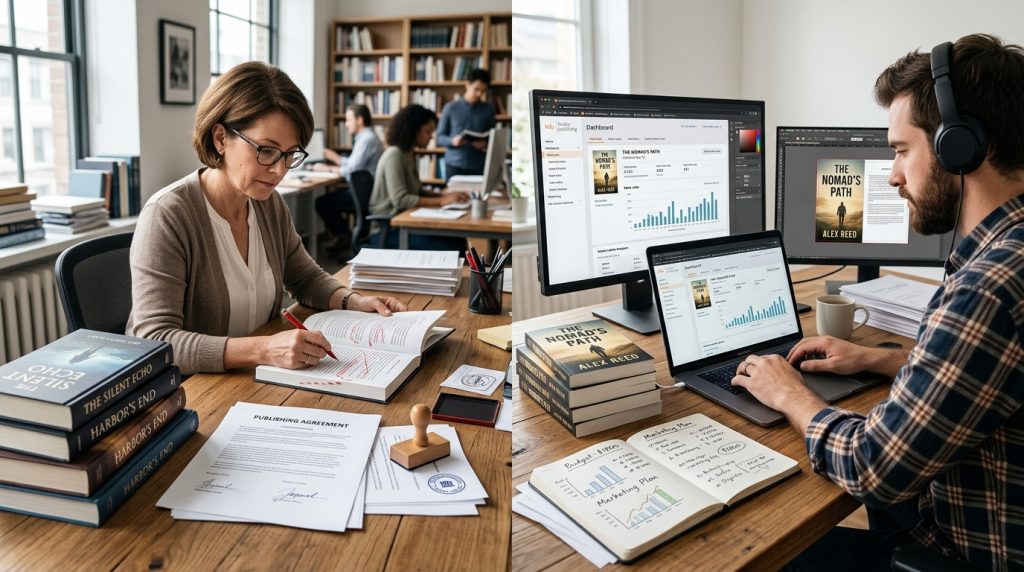
Choosing between traditional publishing and self-publishing dictates who pays for production. Traditional publishers absorb every expense, including developmental edits, cover creation, proofreading, and physical distribution. They pay the author an advance against future earnings, making the initial out-of-pocket cost zero.
The trade-off involves lower royalty percentages, often between ten and fifteen per cent, alongside long production timelines lasting up to two years. You also relinquish intellectual property control and final design choices.
Self-publishing flips this model entirely. You fund every phase, including editorial passes, layout design, and marketing campaigns.
Typical self-publishing budgets span fifteen hundred dollars to six thousand dollars.
You retain complete creative ownership, publish on your schedule, and collect royalties reaching up to seventy per cent on digital sales.
Lincoln Book Publishing empowers independent authors by delivering high-end publishing infrastructure without corporate gatekeeping.
We help creators weigh these financial trade-offs objectively while maintaining total creative freedom.
Understanding these mechanics allows authors to select a path that matches their long-term brand objectives, financial resources, and creative vision.
Every dollar spent in self-publishing represents a direct investment into your author business asset.
Publishing Cost Categories What You Pay for Before and After Printing

Book production splits into pre-printing investments and post-printing operational expenses. Pre-printing expenses form the foundation of product quality.
You invest capital into developmental editing, copyediting, proofreading, cover art creation, and interior typesetting.
Registering your single ISBN costs one hundred twenty-five dollars through official agencies, while multi-packs lower unit pricing for prolific authors.
Professional ghostwriting support and ethical editorial consultation ensure your manuscript delivers massive reader value before any physical copy exists.
Skimping on pre-printing tasks results in unreadable layouts and weak visual appeal, destroying credibility immediately. Post printing costs focus on physical manufacturing and reader acquisition.
Print on demand models eliminate up-front print runs by printing single copies as orders arrive.
Offset printing requires purchasing thousands of copies up front, lowering per unit costs but increasing initial inventory risk.
Post printing budgets must cover press release distribution, digital advertising campaigns, review copy dispatch, and bookstore distribution fees.
Lincoln Book Publishing structures these categories cleanly so authors allocate capital effectively.
Balancing pre-production refining with post-production promotion ensures your manuscript reaches its target audience without draining working capital or creating inventory stress.
Pricing by Format Print vs eBook vs Audiobook and How Costs Differ
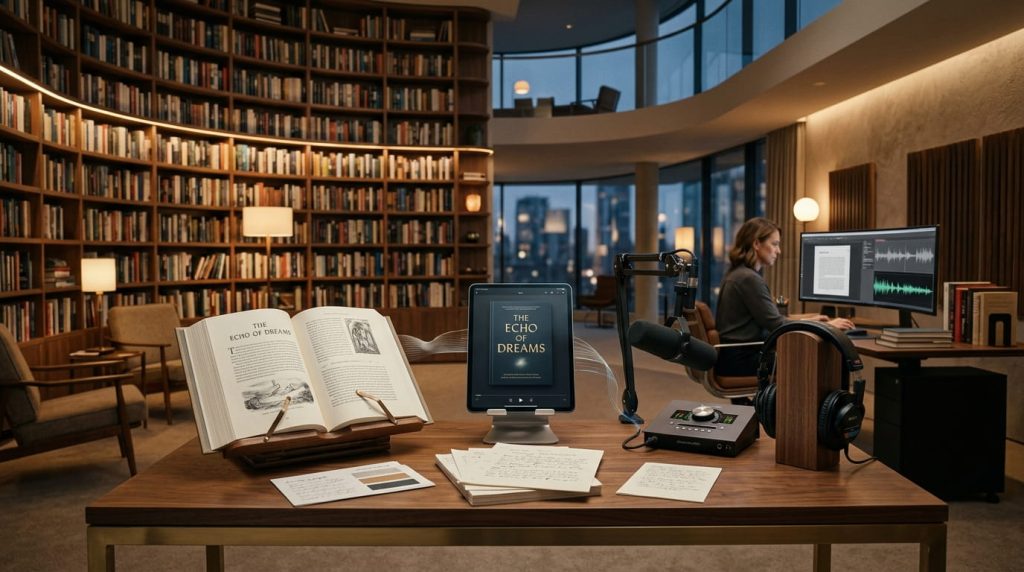
Format decisions dramatically alter your total production ledger. Digital eBooks represent the most affordable format to produce.
Converting a formatted manuscript into ePub files costs roughly $100 to $300, with zero recurring printing or inventory expenses. eBook platforms offer high-margin returns, giving creators high profit margins per sale.
Physical print formats, including paperback and hardcover editions, introduce physical manufacturing math.
Custom interior typesetting for complex print layouts costs between two hundred and five hundred dollars. Print production fees depend on page count, paper stock, ink type, and trim size.
Colour printing costs significantly more than standard black and white text. Audiobooks represent the premium format category.
Professional narration usually costs two hundred to four hundred dollars per finished hour of audio. A standard ten-hour audiobook requires an investment ranging from two thousand to four thousand dollars for talent, recording studio time, and audio mastering.
Lincoln Book Publishing assists creators in launching multi-format publishing strategies.
Releasing your book across eBook, print, and audio formats expands your audience reach and establishes multiple revenue streams from a single manuscript asset, increasing visibility across diverse market channels.
Budget Planning a Realistic Publishing Cost Range for First Time Authors
First-time writers must establish realistic budget boundaries before initiating production. A tight budget tier ranges from five hundred to twelve hundred dollars.
This tier covers essential proofreading, budget cover templates, and self-formatting using specialised software tools. While cost-effective, this approach demands significant author labour and technical skill.
A mid-tier budget spans two thousand to five thousand dollars, representing the ideal balance for professional independent authors. This level secures professional copyediting, custom cover illustration, precise interior formatting, and targeted launch marketing.
Premium budgets reach six thousand to twelve thousand dollars or more. High-end packages include comprehensive developmental editing, professional ghostwriting refinement, multi-format production, and dedicated public relations campaigns.
When calculating how much it costs to publish a book, first-time authors must prioritise manuscript polishing over aggressive ad spend. Overspending on advertising before perfecting the text guarantees wasted promotional dollars.
Partnering with a top Book Publishing Company in the USA like Lincoln Book Publishing ensures every dollar goes toward high-impact services. We craft tailored financial roadmaps that protect author capital while creating high-quality publications that compete directly with traditional publishing house releases on major store shelves.
Understanding the Real Cost of Publishing a Book
Evaluating book production requires analysing long-term value rather than viewing expenses as lost money. The true cost includes opportunity loss, personal time spent, and potential brand damage caused by releasing substandard products.
Publishing an unedited book filled with structural mistakes destroys author credibility and alienates early readers. Fixing a damaged professional reputation costs far more than hiring skilled editors from the start.
Professional manuscript preparation builds a permanent digital asset that generates income, authority, and professional opportunities for years.
Business leaders, industry consultants, and entrepreneurs often use published books to secure high-paying speaking engagements, attract premium clients, and establish market dominance.
The financial returns frequently extend far beyond direct royalty payments.
Lincoln Book Publishing helps authors analyse this full commercial ecosystem.
Investing in professional editing, graphic design, and distribution infrastructure ensures your book operates as a powerful business card.
Cutting corners on foundational production creates hidden long-term liabilities.
Spending money strategically on high-leverage development creates lasting authority and opens doors across your industry.
Successful authors view publishing expenses as strategic investments in their personal brand and long-term professional growth.
A Complete Breakdown of Book Publishing Costs
Understanding specific service line items gives authors total financial control. Why Book Editing Services Are Essential Before You Publish comes down to editorial mechanics.
Book editing services break down into distinct technical tiers, and mastering these tiers makes you an informed publisher. Developmental editing costs three to five cents per word, analysing narrative arc, character pacing, structural logic, and plot holes.
Line and copyediting costs two to four cents per word, refining prose rhythm, correcting syntax errors, ensuring stylistic consistency, and removing repetitive phrasing.
Proofreading costs one to two cents per word, serving as the final filter for mechanical typos and punctuation glitches.
The negative side of editing services includes potential ego friction when editors challenge weak writing, alongside substantial upfront financial commitments.
The positive side is exceptional text clarity, polished storytelling, and error-free prose that earns top reader reviews.
Cover design adds three hundred to fifteen hundred dollars for market-tested visual art. Interior formatting requires $150 to $500 for error-free digital reflow and print pagination.
Lincoln Book Publishing provides transparent itemised breakdowns, so you understand exactly where every dollar flows across your editorial production cycle.
Hidden Self-Publishing Costs Every Author Should Know

Unplanned expenses frequently surprise independent authors during production. Copyright registration with official government offices costs $45–$65 per title.
Ordering physical proof copies and shipping them for final visual inspection costs twenty to fifty dollars per iteration. Platform distribution mechanics can also catch creators unprepared.
Distributing physical books into traditional bookstore channels requires offering forty to fifty-five per cent wholesale discounts, alongside paying mandatory returnability insurance fees.
Software stack tools such as keyword research applications, layout software, and email marketing platforms add recurring subscription costs. Running paid advertising campaigns on major retail networks requires testing budgets before achieving profitable conversion rates.
Cover redesign costs occur when authors purchase cheap initial graphics that fail to attract retail buyers. Working with a leading Book Publishing Company in the USA eliminates these sudden financial surprises.
Lincoln Book Publishing identifies every indirect production fee during initial project mapping, ensuring absolute budget predictability.
Knowing how much it costs to publish a book under realistic market conditions protects your capital and positions your title for sustainable success across all major retail platforms.
Frequently Asked Questions
Publishing costs are determined by your chosen path and production quality. Zero upfront fees are required in traditional publishing, while self publishing expenses are covered directly by the author.
Typically, between $1,000 and $5,000 is spent on professional editing, cover design, and interior formatting. Custom guidance is provided by Lincoln Book Publishing for every budget.
An average investment ranging from $1,000 to $4,000 is usually allocated by independent writers for high quality self publishing.
These funds are distributed among professional copyediting, custom cover illustration, interior typesetting, and initial marketing.
Tailored publishing strategies are crafted by Lincoln Book Publishing so project expenses are kept aligned with your financial goals and plans.
Yes, zero dollars can be spent when basic digital tools and free distribution platforms are chosen. Still, unedited text and amateur covers are easily noticed by readers, causing lower sales.
Essential polishing and design support are supplied by Lincoln Book Publishing so costly errors are avoided and high commercial success is achieved by new authors.
Total publishing costs are driven by manuscript word count, editing depth, cover design complexity, and format selections. Production expenses are also expanded when multiple format releases including eBooks, paperbacks, and audiobooks are chosen.
Clear budget roadmaps are provided by Lincoln Book Publishing so every production fee is fully understood before launch plans are finalized completely.
Initial costs are zero in traditional publishing because investments are funded entirely by the publisher. Conversely, self publishing is financed upfront by the author, though significantly higher royalty rates are earned on future sales.
Strategic production paths are mapped out by Lincoln Book Publishing so author profits are boosted while upfront spending is kept well controlled.
Between $500 and $2,500 is typically charged for manuscript editing based on length and editing depth. Custom cover art is priced from $300 to $1,500 by skilled designers.
Combined editing and design solutions are offered by Lincoln Book Publishing so professional market standards are achieved without excessive production expenses being incurred by first time creators.
Free ISBNs are assigned by platforms like Amazon, but publishing control is limited by free identifiers. Single custom ISBNs are purchased for $125 through Bowker by authors seeking complete publisher ownership.
Direct registration guidance is provided by Lincoln Book Publishing so full catalog rights and distribution channels are properly secured for your brand new title.
Zero upfront uploading fees are charged by Amazon KDP for digital and print manuscripts. Physical printing costs are automatically deducted from earned royalties whenever customer orders are fulfilled.
High quality print files are carefully prepared by Lincoln Book Publishing so formatting rejection is completely avoided and smooth publication is accomplished on the Kindle Direct platform.
Unplanned expenses are often encountered through proof copy shipping, copyright filings, wholesale bookstore discounts, and advertising software subscriptions. Redesign expenses are also triggered when initial low quality covers are rejected by target readers.
Full financial transparency is guaranteed by Lincoln Book Publishing so all hidden fees are easily identified and avoided prior to public release.
Overall expenses are reduced when manuscripts are thoroughly self edited before professional review, and free formatting software is used for digital layouts.
Marketing focus is best placed on organic promotion. Flexible production packages are provided by Lincoln Book Publishing so author capital is invested strictly where maximal commercial value is added to your book project.
Final Thoughts
Determining how much does it cost to publish a book depends on your vision, quality goals, and selected services. You control your investment by choosing professional editing, custom cover design, and targeted marketing campaigns that match your budget.
Lincoln Book Publishing guides you through every stage, eliminating surprise costs while protecting your creative freedom. Reach out to our team today and turn your completed manuscript into a market-ready book.
Ready to Publish Your Book with Confidence?
Understanding how much it costs to publish a book is the first step toward a successful publishing journey. Lincoln Book Publishing offers professional editing, design, publishing, and marketing services to help you publish with confidence and within your budget. Contact our team today to get started.